Entrepreneurship education has traditionally been associated with business plans, start-up competitions, founder talks and case studies. These activities have an important role to play, but they can sometimes create a paradox: students learn extensively about entrepreneurship without actually experiencing what it means to build something. The real test of entrepreneurship, however, begins when an idea meets reality. Is there a problem worth solving? Will someone pay for the solution? Can the proposition be delivered with the resources available? What happens when the first assumption turns out to be wrong? These questions cannot be answered fully through lectures or presentations. They have to be tested through action.
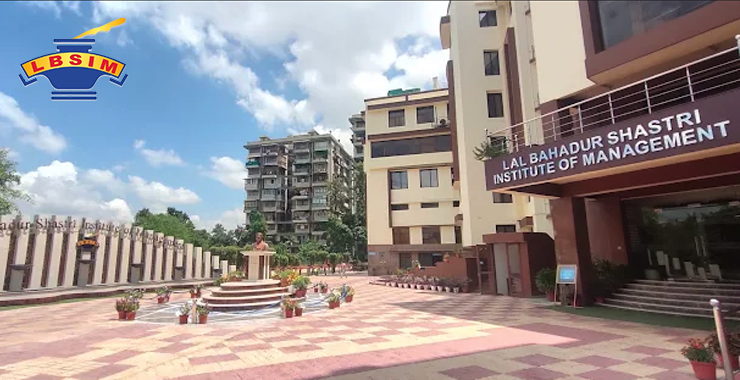
This is why entrepreneurship education needs to move from knowing to doing. Entrepreneurship, after all, is not merely about starting a company. It is a way of thinking and acting. It involves recognising opportunities, questioning assumptions, dealing with uncertainty, experimenting with alternatives and creating value. These capabilities are increasingly relevant even for students who may never become entrepreneurs. A manager working in a large organisation also needs initiative, creativity, problem-solving ability and the confidence to experiment. At Lal Bahadur Shastri Institute of Management (LBSIM), this thinking is shaping a more practice-oriented approach to entrepreneurship education. The objective is not to persuade every management student to become a founder. Rather, it is to ensure that every student gets an opportunity to experience the entrepreneurial process.
The journey begins with entrepreneurial thinking. Students are encouraged to look at problems differently, identify opportunities and develop propositions around them. But thinking is followed by entrepreneurial practice. Students are expected to move beyond an idea and test it - through a prototype, minimum viable product, market experiment, customer interaction or some other form of evidence. This seemingly simple shift is important. An idea presented in a classroom can appear convincing. An idea tested in the marketplace can reveal something entirely different. A student may discover that the problem is not important enough for customers to pay for. Another may find that the proposed solution is too expensive. A third may discover an entirely different customer segment. Such outcomes are not failures of entrepreneurship education. They are precisely what entrepreneurship education should enable students to learn. The emphasis, therefore, is on experimentation before escalation.
LBSIM’s Start-up Launchpad builds on this philosophy by providing students with a structured pathway to take promising ideas further while continuing their management education. Selected student ventures can receive mentoring, incubation support and opportunities for seed funding, subject to evaluation. The idea is to give students the time and institutional support to test whether their ideas can become viable ventures. This also changes the role of a business school. Instead of being only a place where entrepreneurial knowledge is transmitted, it can become a place where entrepreneurial possibilities are tested.
The recently established strategic partnership between LBSIM’s Innovation, Incubation and Entrepreneurship Centre (LBS IIEC) and IIM Calcutta Innovation Park adds another dimension to this ecosystem. The partnership brings greater access to incubation expertise, mentors, networks, startup programmes and funding opportunities. More importantly, it creates a stronger bridge between what students experiment with inside the institution and the wider entrepreneurial ecosystem outside it. The aim is to create a continuum rather than a collection of disconnected activities. The Entrepreneurship Cell can generate student participation and energy. Classroom learning can provide conceptual foundations. Hackathons, workshops and market experiments can enable students to test ideas.
The Start-up Launchpad can help promising ventures progress further, while the incubation ecosystem can provide mentoring, networks and access to resources required for growth. In effect, the pathway becomes Think. Practice. Build. Incubate. This approach also has implications for how entrepreneurship itself is understood. Not every entrepreneurial opportunity has to be a technology start-up seeking venture capital. Innovation can emerge in traditional businesses, services, social enterprises, local markets, rural communities and underserved segments. What matters is the ability to identify a problem, understand the context, develop a proposition and create value.
For management education, this is particularly significant. The world that today's students will enter is characterised by rapid technological change, shifting business models and considerable uncertainty. Organisations increasingly need people who can work with ambiguity rather than simply follow established processes. They need individuals who can identify opportunities, test possibilities and learn quickly. Entrepreneurship education can therefore become much more than preparation for entrepreneurship as a career. It can become preparation for working in an environment where the ability to create, adapt and experiment is itself a competitive advantage.
There is also an important pedagogical lesson here. Students often learn best when the consequences of their decisions are real. A customer who refuses to buy a product teaches something that a classroom discussion cannot fully replicate. A prototype that does not work creates a different kind of learning from a case study about product failure. A first sale, however small, can teach more about value creation than a presentation on revenue models. The objective is not to eliminate classroom learning. On the contrary, theory becomes more meaningful when students have a context in which to apply it. The classroom provides the concepts; practice provides the test. That is perhaps the larger opportunity for business schools. Rather than treating entrepreneurship as another subject in the curriculum, they can create environments in which students repeatedly move between learning, experimentation and reflection.
Ultimately, the goal should not be measured only by the number of start-ups created. It should also be measured by the number of students who learn to look at problems differently, take initiative, test assumptions and create value. Some may eventually build companies. Others may become intrapreneurs, consultants, managers, innovators or leaders within established organisations. Their destinations may differ, but the entrepreneurial capability they develop can remain valuable throughout their careers.
Entrepreneurship education should not stop at writing the plan. It should start with a question, test it in the real world, learn from what happens—and build what proves worthy of being built. That is the journey from “Think” to “Practice” to “Build” at LBSIM!
That is how entrepreneurship can move from being something students study to something they actually experienc PICTURES


 E-305, Industrial Area, Sahibzada Ajit Singh Nagar, Punjab 160055, IN