Marketing is the discipline of understanding customers and communicating how a product or service delivers value to them. You can think of it as a social and managerial process that helps organisations acquire, satisfy, and retain customers by communicating the value of an offering, which facilitates a mutually beneficial exchange.
The traditional marketing theory, developed by Philip Kotler, widely teaches the 4Ps framework – Product, Price, Place, and Promotion. These frameworks emerged from older, production-oriented business models, which prioritised efficiency and output over customer preferences.
Today, marketing practices have evolved significantly in response to technological advancements and changing customer behaviour. And modern marketing increasingly emphasises relationship-building, trust, customer experience, and long-term value creation. In fact, India’s advertising industry crossed the ₹1 trillion mark in 2025, with digital advertising accounting for 46% of total ad spend.
Despite this evolution, many Digital Marketing MBA programs have remained anchored in traditional frameworks that reflect an outdated business reality.
In simple terms, a widening gap now exists between how marketing is taught in MBA Marketing Specialisation programs and how it’s actually practised.
How Marketing Has Fundamentally Evolved
Marketing is Now Measurable in Real Time
Marketing is measurable in real time today because every user action – clicks, views, adds to cart, purchases – is captured as live data and processed instantly through marketing analytics tools. They allow marketers to see performance within minutes and act immediately. Teams can now track live metrics such as CPA, ROAS, conversion rate, and engagement while campaigns are still running. This means marketing has evolved from retrospective reporting into continuous, data-driven decision-making. This is especially pronounced in eCommerce marketing, where metrics like attribution, conversion rates, and customer lifetime value are tracked in real time.
Marketing is Directly Linked to Revenue
Marketing teams are expected to demonstrate how their budgetary allocations result in sales or measurable impact, not just awareness. For example, Nykaa’s performance illustrates this clearly.
The company increased its marketing spend by 29%, focusing on customer acquisition and brand building. As a result, Nykaa reported a 61% increase in profit (261.2 million rupees) as the company’s marketing investments paid off, with more consumers buying higher-priced beauty products on its platform. This indicates that marketing is now directly accountable for revenue.
Data and Experimentation Drive Decisions
Marketers run controlled experiments, so decisions are data-driven and no longer rely on “intuition” or “guesswork”. For example,
- Performance marketing teams run A/B tests on landing pages and scale winners
- Growth marketing teams run multi-faceted experiments (different pricing, onboarding flows, promotions) to maximise conversion and customer lifetime value (LTV).
Marketing Overlaps With Product and Growth
The lines between marketing, product, and growth are blurring. They’re now part of a single loop where marketing influences product features, and teams iterate on what converts and retains consumers. For example, Swiggy tightly integrates its product changes, like in-app offers, rewards, subscription bundles, etc., with its marketing campaigns to boost retention and LTV.
AI is Transforming Execution
Artificial intelligence helps automate and streamline many basic marketing functions. And AI integration into everyday workflows is accelerating marketing execution and enabling teams to scale more efficiently. Survey data also reflects this growing adoption of AI in marketing in India –
- 21.5% of employees report high AI adoption within their company’s marketing plan and processes, while 33.64% report a medium adoption rate.
- 82% of businesses are prioritising AI for SEO in 2026, with 25% of marketing budgets allocated to AI tools.
- 90% of marketing agencies use generative AI daily.
- Industries like B2B SaaS, E-commerce & Retail, Healthcare, Real Estate, Education, and Professional Services show the highest AI adoption rates.
These figures show that a majority of organisations are actively integrating AI tools into their marketing workflows.
Where Many MBA Marketing Specialisations Fall Short
Despite shifts in marketing practices, many MBAs have not fully updated their curriculum to offer industry-aligned MBA programs. Many experts argue that the traditional MBA was designed for a relatively stable and predictable business environment that no longer exists.
While it’s not completely obsolete, traditional marketing courses still focus on historic examples in brand campaigns and broad frameworks, with little emphasis on new digital tools. In practice, this looks like –
- Graduates entering the workforce with significant skill gaps.
- Limited understanding of the creator economy
- Lack of training in personal branding and influencer strategy
Meanwhile, companies increasingly demand proficiency in performance marketing, data analytics, and social media metrics.
So, while case studies have their place, they don’t teach you to solve a problem you’ve never seen before.
The Rise of Industry-Aligned Marketing Education
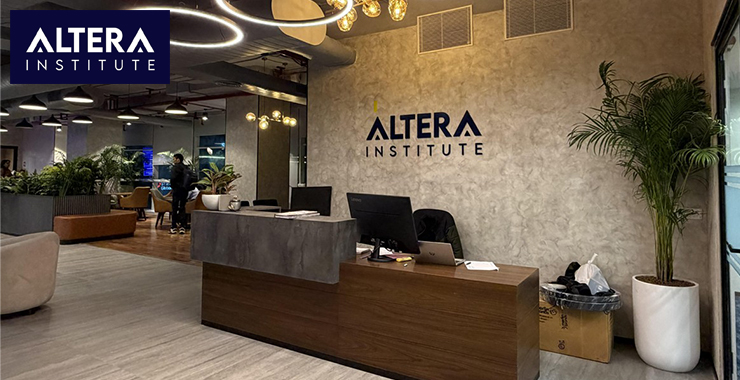
To address this gap, MBAs are being supplemented by specialised, industry-focused programs. Many institutions have launched modern marketing education programs designed by the industry for the industry. At the forefront of this marketing curriculum evolution, you have Altera Institute.
Altera Institute is an industry-backed B-school in Gurgaon that focuses on offering a 15-month
PGP in Applied Marketing.
Its pedagogy focuses on a Digital AI-First Curriculum that’s relevant to today’s careers. So, you get –
- 100% industry-backed curriculum that focuses on specialised industry segments like brand management, product management, growth marketing, and applications of AI. All of which are relevant for today’s careers.
- A faculty of professionals with deep industry experience, some of whom were CXOs and CEOs at leading FMCG, D2C, and Consumer Tech companies.
In fact, our 2025 cohort achieved a 100% placement rate, with 70% of students receiving offers above ₹15 LPA in high-growth marketing roles.
Conclusion
Marketing’s roles have evolved far beyond traditional advertising. Companies now require analytical rigour and tech fluency from marketers to drive revenue in today’s digital economy. However, many MBA Marketing Specialisation programmes haven’t caught up. The result is a growing skills gap between fresh graduates and what companies need.
As the digital landscape continues to change, marketing education must also adapt to prepare students for the future, focusing on emerging trends. Future-ready programmes are shifting beyond traditional theory to focus on data-driven decision-making, digital ecosystems, and rapidly emerging marketing technologies.
Industry-aligned programmes like Altera Institute’s are specifically designed with this shift in mind, aligning their curriculum with the skills and tools the industry increasingly demands.
By integrating live projects, digital-first frameworks, and revenue-oriented learning models, these programmes move beyond conventional classroom learning. The result is a forward-looking curriculum that equips students with both strategic understanding and practical execution skills, preparing them for the next generation of marketing roles.
Frequently Asked Questions (FAQs)
What skills are needed in marketing?
Key skills job roles today require are –
- Data & business understanding, like unit economics and revenue impact
- Communication & stakeholder management, and the ability to turn data insights into compelling narratives
- Strategic thinking & problem solving, like aligning marketing strategy with product, pricing, and distribution decisions.
- SEO, SEM, campaign execution, content creation, data analytics, social media marketing and community management
- A working proficiency in AI and marketing tech tools.
You’ll also need to develop soft skills such as communication & presentation, leadership & teamwork, creativity, strategic thinking, and problem-solving.
What is the highest-paid job in marketing?
In India, top-paid marketing roles tend to be senior leadership and strategic management positions like –
- Chief Marketing Officer (CMO): ₹20L - ₹1.1 Crore per year
- Marketing Director/Head of Marketing: ₹22L - ₹1 Crore per year (in metros like Mumbai)
- Product Marketing Managers: ₹7.2L - ₹35L per year
- Growth Marketing Managers: ₹6L - ₹33L per year
Are marketers in high demand?
Yes, the demand for digital marketers is particularly high in India, with industry reports suggesting that India alone will have more than 1.5 million digital marketing jobs by 2026.
Which type of marketing is best?
The “best” type of marketing will largely depend on your career goals. For example, digital marketing offers more job opportunities and growth, while traditional marketing still has its place in large FMCG or mass-market campaigns.
 E-305, Industrial Area, Sahibzada Ajit Singh Nagar, Punjab 160055, IN